I have nothing to hide
I have nothing to hide often comes with not knowing what is done with one's personal data. Otherwise, we would hear more often I have nothing to share.
"I have nothing to hide" is an argument that maintains that data harvesting, data analysis, and surveillance are not a problem for privacy. At least, as long as this privacy is not the subject of activities punishable by local law. This argument is regularly used in discussions concerning privacy and its respect. Would the notion of privacy therefore be an anomaly?
The fact is that the majority of people believe that these processes are not directed against them because "they are nobody." These same beliefs designate the targets as "Thugs, criminals, those who engage in activities punishable by law" despite almost daily evidence indicating that the surveillance of individuals is a daily occurrence.
"I have nothing to hide" often comes with the fact of not knowing what is done with one's personal data. Otherwise, we would hear "I have nothing to share" more often.
Clarification on a few notions
Before starting to talk about privacy, it is important to agree on a few vocabulary points used in the introduction.
| Notion | Description |
|---|---|
| Privacy | Privacy is the ability for a person or a group of people to isolate themselves in order to protect their well-being. |
| Surveillance | Surveillance is the act of observing activities. It can be secret or obvious. |
To understand the importance of such a subject, one must first look at its definition. Privacy is the ability for a person to isolate themselves in order to protect their well-being. The notion of privacy assumes the notions of freedom of conscience and private property. The concept of privacy also opposes the concept of public life. In this sense, privacy can sometimes echo anonymity and the desire to remain out of public life.
The notion of privacy is distinct from the private home. Everything that happens in a private home falls under privacy, but privacy also extends to public places. Thus, the public revelation of a person's private life, particularly on the Internet, can compromise their reputation, rightly or wrongly.
In this context, saying that respect for privacy accepts exceptions is false. Whether it is to justify a collective security measure or because we wrongly judge that internal private information is less important than that of a criminal. To realize this, one simply needs to replace "government" with "hacker."
- I have nothing to hide "from the government (or such a company)"
- I have nothing to hide "from a hacker"
In summary, the government would have the right to spy on individuals but hackers would not? Article 12 of the Universal Declaration of Human Rights tells us:
No one shall be subjected to arbitrary interference with his privacy, family, home or correspondence, nor to attacks upon his honour and reputation. Everyone has the right to the protection of the law against such interference or attacks.
In law, a government must justify its intrusion precisely because privacy is a right. It must not create laws that will legitimize any exception, implying a violation.
The importance of privacy
In absolute terms, we do not need to have "something to hide" to hide "something." The important thing is not to have something to hide, but rather the experience of possessing a private, intimate area that can be hidden, or whose access can be restricted. From a psychological point of view, we become individuals when we discover that we have the power to hide something from others.
Would we go as far as installing cameras in our toilets, in our bedrooms? The answer is no. Yet, our actions in these places are, a priori, all legal. Why not equip all children with them to fight against acts of pedophilia? It would be absurd, wouldn't it? This discomfort felt when reading these examples is what happens during an infringement of privacy.
Another example. Imagine now that when leaving the office, you find individuals rummaging through the trash to recover information about your clients, employees, contracts... No reason to worry. There is "nothing to hide," right?
The first example illustrates a need for intimacy. The second highlights a need to protect the private information of an organization's members.
Arguing that you don't care about the right to privacy because you have nothing to hide is no different than saying you don't care about free speech because you have nothing to say. – Edward Snowden
Some people may wish to conceal behavior that is poorly accepted by the dominant culture. Others prefer to remain silent about their finances, family, or work. People who have "nothing to hide" do not always realize the extent to which data crossing allows one to obtain pushed information on their situation. Social networks, search engines, emails, banking companies, frequently visited stores... are all sources of information that allow a psychological and emotional profile of a person to be established. This profile can then be used to detect their love life, their needs, their lifestyle, or their financial situation.
More generally, the fact for an individual to know they are potentially monitored can lead them to modify their behavior and to self-censor.
In his novel 1984, George Orwell explains that the most dangerous thing in such a situation is not to be continuously monitored, but to know that one is liable to be at any moment (since it is impossible to verify whether one is observed or not).
Protecting oneself and others
Not feeling concerned by the collection of one's personal data is one thing; but for some, defending their privacy also amounts to defending that of those around them. The principle is as follows: if personally I do not place importance on the data of my exchanges and communications being collected, nothing assures me that among my correspondents, everyone will be of the same opinion. Protecting one's privacy is also and above all protecting that of one's loved ones, or even that of unknown individuals whose path one crosses.
How do smugglers hunt rhinos? By analyzing the photos of tourists which allow them to extract the GPS positions of the animals during the day.
How could a pedophile monitor a child? In the same way, by analyzing the photos that parents post on social networks.
A surveillance system that targets an individual will also take an interest in their more or less close entourage. Someone who has "nothing to hide" can find themselves involved by one of their contacts. Everyone is therefore not only responsible for the privacy of those around them but also liable to be placed under surveillance according to their relatives.
Edward Snowden's revelations showed that when the NSA monitors an individual, it also monitors up to 3 levels of their relationships. The French application StopCovid / TousAntiCovid monitors social relationships. To my knowledge, the French Intelligence has not said thank you publicly (in Singapore, it is already done).
That is the whole point. When we talk about privacy protection, it includes one's own protection, but also that of the people who surround us. Not feeling concerned by this protection on a personal scale is one thing. However, one must keep in mind that this negligence also puts our contacts at risk: our loved ones, our professional environment, and even strangers in the street when it comes to photos for example.
The misuse of collected data
Any entity collecting data can disseminate information about a person that is likely to harm them, or use information about them to deny them access to certain services. Even if this person has committed no bad action. It is therefore possible to cause harm to someone by mistake, from collected data. It is not excluded that data be disseminated by mistake or that someone obtain it by theft.
The question of reusing data also arises. When data is not collected transparently, is it possible to ensure that there will be no drift?
The harvesters, the greatest defenders of their own privacy
The heads of organizations that set up data analysis programs are not always inclined to make the concessions on their own privacy that they intend to impose on others. In the same way, those who have "nothing to hide" are reluctant to disseminate their health status, their finances, their sexual practices, or the intimate information of their children.
During a question on privacy, Senator Durbin asked Mark Zuckerberg (CEO of Facebook) if he could share before the Senate the name of the hotel where he was staying.

Mr. Zuckerberg answered "No" but he could just as well have continued with: "but I can tell you where you slept last night."
Motivations not always stated
Communication towards monitored individuals is complex. Also, the use of a cover is almost always necessary.
For example:
- Accepting the vaccine pass or refusing to travel, to eat at a restaurant, or any social activity.
- SMEs and media will die if Apple allows users to control the respect of their privacy by Facebook.
- The StopCovid (TousAntiCovid) application to warn us or face the danger of the virus.
The first element to detect a cover is to observe the emotional response of individuals. The objective being to direct fear onto a subject that seems more concrete in terms of effect and time. Losing the freedom to travel this summer speaks more than losing health insurance in 3 years. Losing a bit of advertising revenue today speaks more than losing the sovereignty of one's online business in the long term.
This emotional response is used so that individuals authorize what they would not have authorized otherwise.
Privacy is important for everyone
So, why should we worry about general surveillance whatever the source (A government, a health organization, a private company, an individual)? After all, if we do nothing serious, we have no reason to worry.
The translation of this idea demonstrates the abandonment of our rights. It is a way of denying the need for these rights in the future because it is not important now, and believing that surveillance is conducted in the interest of the monitored individuals. Rights are important because we do not know when we will need them.
Everyone should be able to lead their life as they see fit, without having to worry about what a surveillance report will think of these actions in the future, how they risk being used or interpreting possible intentions. We need trust in our environment; yet this is only a facade if privacy is not respected.
I need privacy not because my actions are questionable, but because your judgment and intentions are. – Reddit, anonymous
In the end, the argument "I have nothing to hide" is only a method to divert the debate on privacy protection. This argument only takes into account part of the problem. It can trap you because it forces the debate to focus on a very narrow understanding of privacy. But when confronted with misuse, collection, surveillance, and disclosure, this argument is ultimately irrelevant.
For those of you who speak English, I invite you to watch this video.
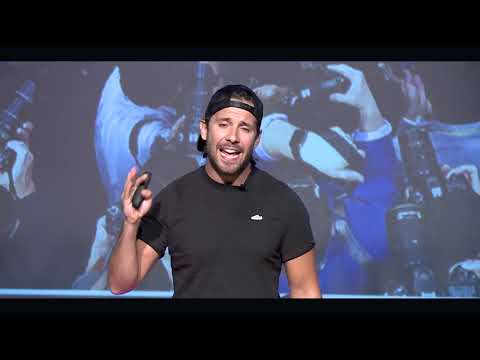
"I have nothing to hide", Data Privacy in 2020 | Nelio Leone | TEDxAmityUniversityDubai